Data infrastructure.
Organize and query multi-modal imaging, clinical context and technical metadata at study level.
Define the modality, pathology, cohort, ground truth, geography and permitted use. MedCorpora assesses matching hospital inventory and sourcing options before any patient-level data moves.
Missing sequences. Scanner drift. Inconsistent DICOM. Labels trapped in reports. The gap between a promising model and reliable clinical performance is not only a model problem. It is a data infrastructure problem.
Organize and query multi-modal imaging, clinical context and technical metadata at study level.
One control plane for hospital inventory, permissions, privacy, quality, provenance and release state.
Materialize versioned cohorts for training, evaluation and site, scanner and population holdouts.
De-identify, resolve, normalize, enrich, validate, version and deliver under controlled terms.
$ medcorpora release --programme clinical-imagingMedical models learn reality from variation across hospitals, scanners, protocols and populations. The bottleneck is not only compute. It is authorized, organized and clinically defensible data.
Explore the data engineDefine the clinical task, target population, imaging specification, evidence standard and permitted use before any patient-level data moves.
Hospital authorization and permitted-use scope.
De-identification method and technical tag policy.
Case, sequence, scanner, label and QC distributions.
Sample review, exclusions, release terms and lineage.
MedCorpora is a specialized data infrastructure and operational management platform connecting participating hospital archives to governed medical AI datasets. It coordinates inventory, written programme authority, de-identification, DICOM and clinical-data engineering, quality evidence, licensing and controlled release.
Read the complete capability brief ↗MedCorpora is based in Kerala, India. Current sourcing availability includes hospital relationships in India; US and other geographic requests are assessed through buyer-specific feasibility.
Brain MRI Study-level verification and privacy clearance
Liver MRI + MRE Sourcing scope
Non-contrast CT Sourcing scope
Review the rights model ↗Clinical data becomes infrastructure when hospital authority, privacy controls, technical completeness, ground truth and provenance are connected in one governed release.
A modular execution layer runs governed Python transformations, imaging intelligence and quality controls across clinical data. Every output stays connected to its source, policy and release history.
Explore the platform ↗Controlled ingestion from hospital PACS, archives and approved clinical exports.
Patient-copy, study, series and instance relationships reconstructed into a traceable data graph.
Policy, permitted use, privacy controls and technical allow-lists are enforced at execution time.
Versioned Python jobs perform de-identification, conversion, normalization and metadata engineering.
Task-specific models classify series, detect anomalies and stage clinical enrichment for review.
Reproducible cohort compilation, patient-safe splits, experiment runs and model artifact tracking.
Performance, calibration, subgroup and external-cohort evidence are attached to each model release.
Immutable manifests, lineage, access controls and delivery records govern data and model products.
Programmes begin with the clinical and technical requirement, then map it against verified hospital inventory. The scopes below are reference programmes, not the limits of the platform.
Hospital-sourced, multi-vendor neuroimaging data engineered for model development and validation.
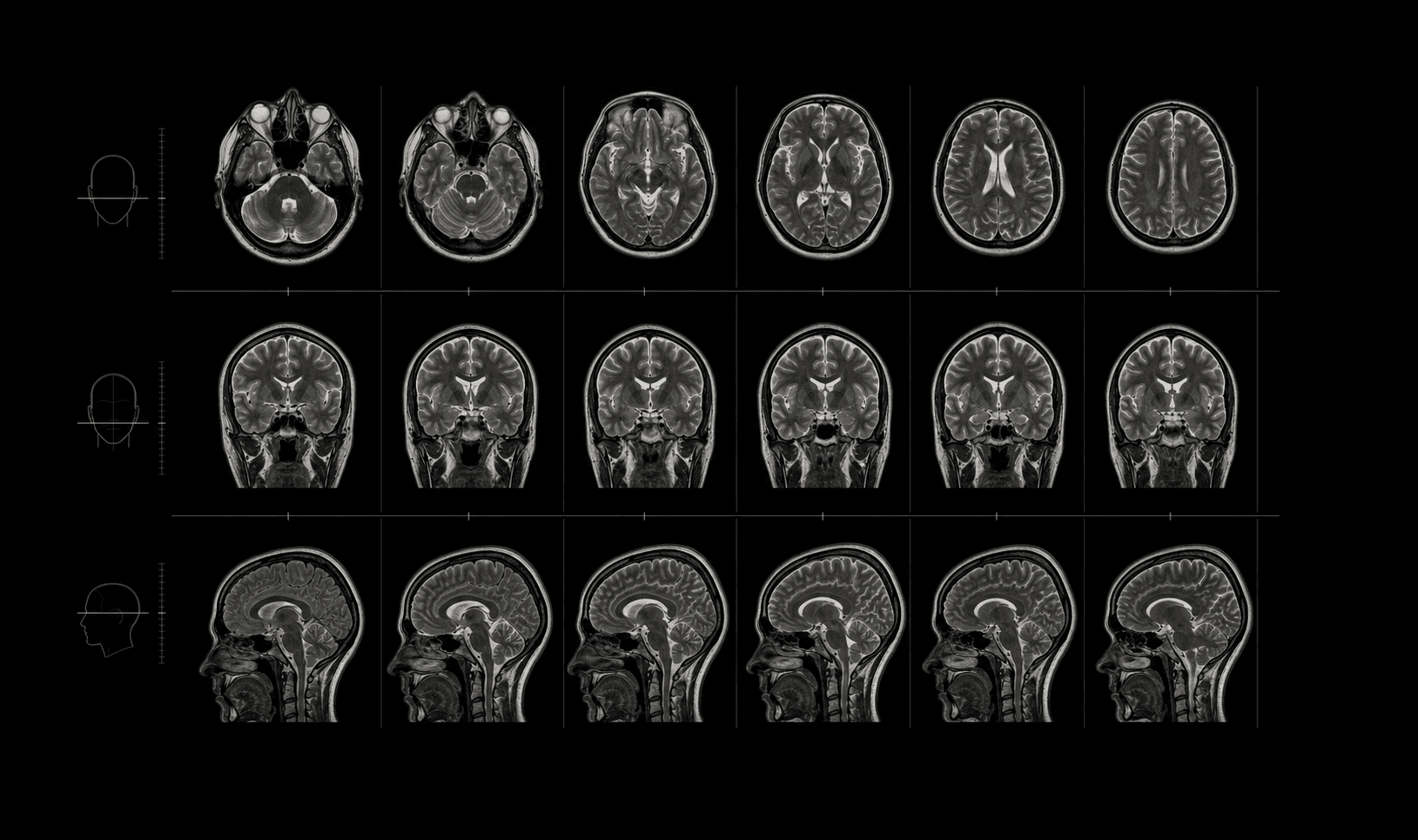 Open programme brief ↗
3D T1 · T2 · FLAIR · DWI / ADC · selected perfusion
1.5T and 3T · multi-vendor
Source DICOM · derived NIfTI · metadata · QC
Reports, diagnosis and task-specific annotations where verified
Hospital-sourced liver imaging across disease, scanner and population distributions.
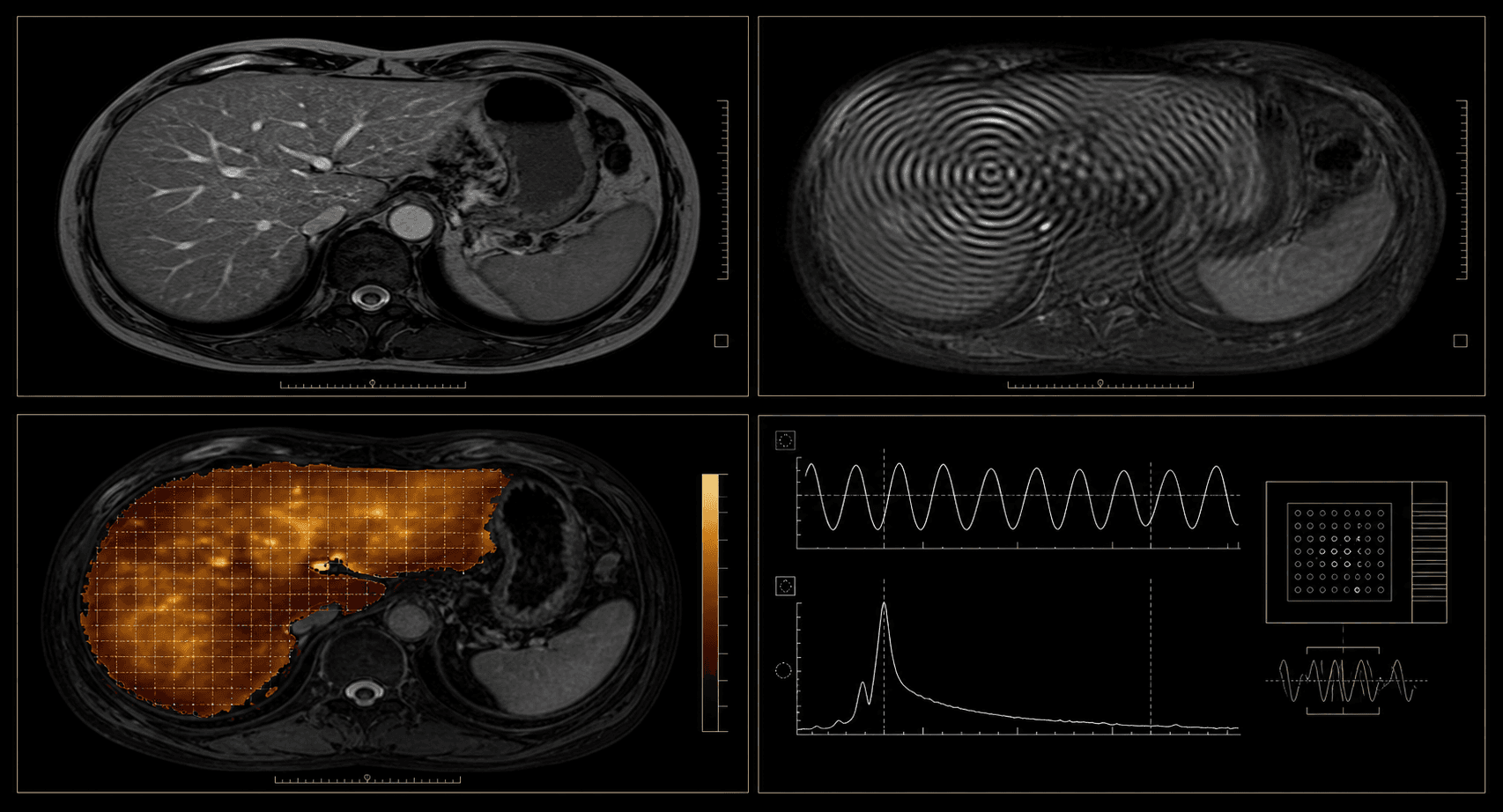 Open programme brief ↗
MRE · T1-weighted · T2-weighted · diffusion
MASH / MASLD · HBV · HCV · cirrhosis · AIH · PSC
Defined disease labels · demographics · multi-scanner coverage
Pilot to hundreds of studies, subject to verified inventory
Hospital CT cohorts structured across cardiovascular, pulmonary, bone and body-composition applications.
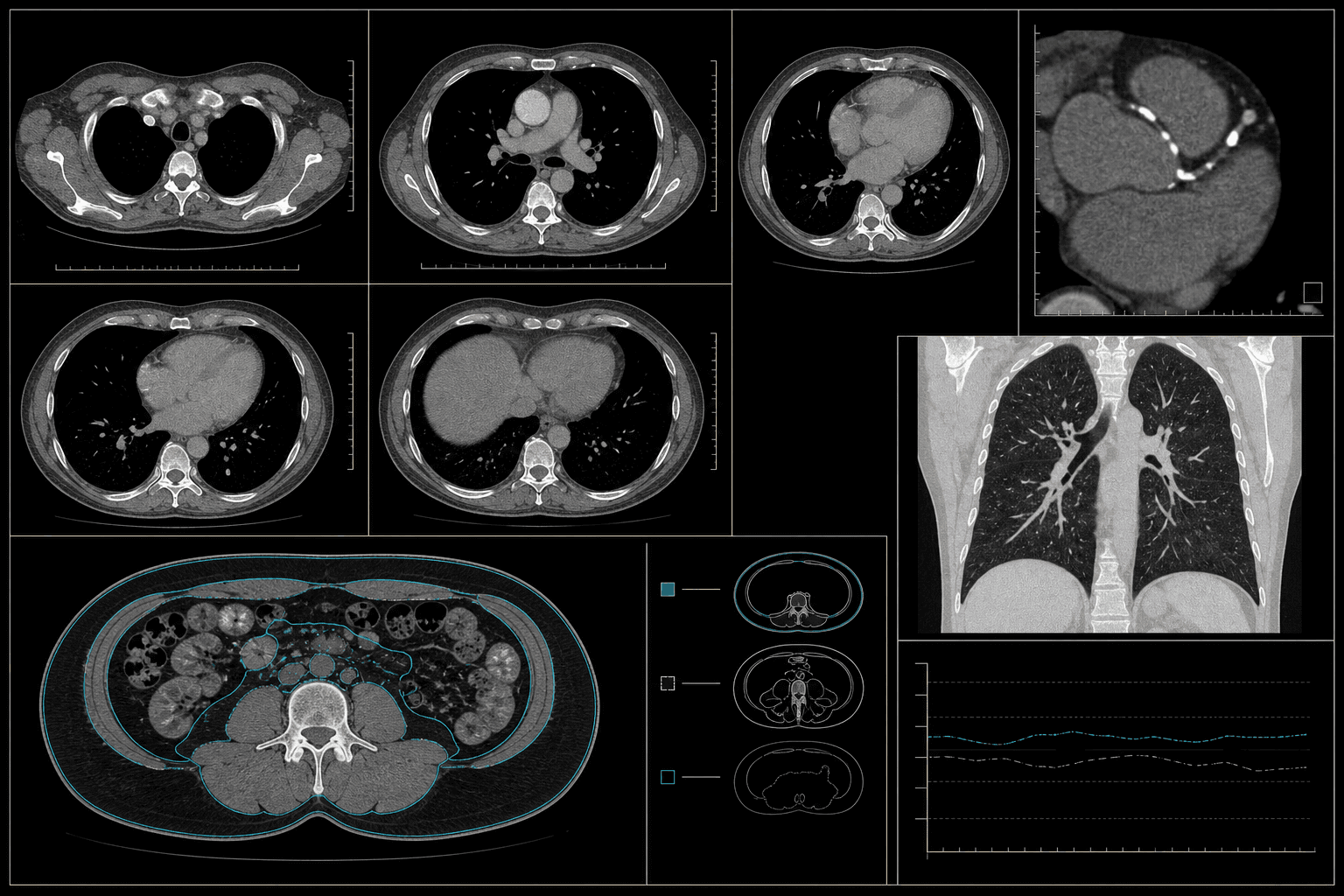 Open programme brief ↗
Cardiovascular · lung · bone · body composition
Scanner model · reconstruction · slice thickness · protocol
Reports · quantitative measurements · clinical outcomes
Site, scanner and demographic holdout design
Every release is assembled against a defined clinical programme. Imaging, clinical context and annotations are included only when verified.
Study and series-level DICOM organized without losing clinically relevant acquisition context.
NIfTI volumes, normalized orientation, series mapping, thumbnails and machine-readable metadata.
Radiology reports, disease labels, measurements, segmentations or outcomes when included in scope.
Completeness checks, exclusions, acquisition distributions, annotation review and a dataset card.
Hospital authorization, permitted-use terms, de-identification documentation and supplier records.
A common operating model connects hospital inventory, clinical scope, technical structure, evidence, governance and access.
Anatomy · pathology · model task · intended claim
Modality · sequences · contrast · raw or derived data
Vendor · model · field strength · protocol · reconstruction
Case count · controls · disease mix · demographics · geography
Reports · labels · masks · measurements · outcomes · reviewer standard
Completeness · artefacts · exclusions · acceptance criteria
Permitted use · pilot and final volume · timeline · exclusivity
Enterprise diligence verifies the supplier, hospital authority, population distribution, de-identification method and release history.
Programme inventory is established before release. Data moves only after rights, privacy scope and technical controls are defined.
Convert the model roadmap into a testable data specification.
Check aggregate hospital inventory before requesting exports.
Confirm hospital rights, commercial scope and governance.
Remove identifiers while preserving an approved technical tag allow-list.
Classify series, derive volumes, join labels and document QC.
Review a small sample against technical and clinical acceptance criteria.
Execute supplier terms, permitted use and secure delivery.
Bring the clinical task, modality and intended use. We will turn them into a hospital-ready feasibility specification.