What is being verified
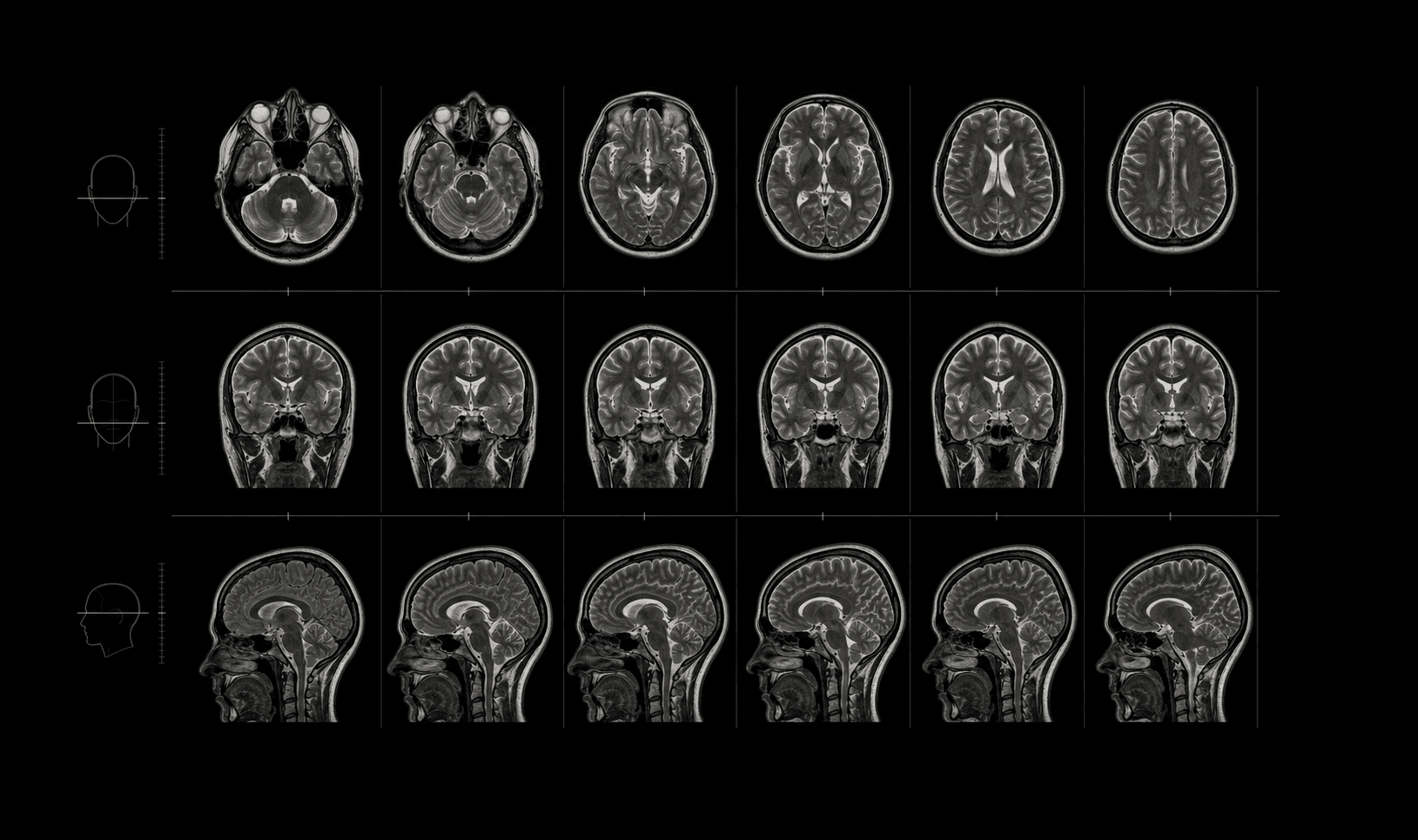
A study count is not enough. Verification checks that examinations can be grouped correctly, expected sequences are present, acquisition metadata is usable, derived volumes match their source series and no patient identity remains in metadata or pixels.
Sequence completeness and pathology distribution will be reported at study level. Selected perfusion data is included only where acquisition and derived-map provenance can be established.
Potential model tasks
The corpus may support classification, retrieval, representation learning, sequence completion, quality control and selected pathology tasks. Suitability for a specific claim depends on the available clinical truth and cohort composition, not on image count alone.
- Normal versus abnormal study classification where labels are validated
- Stroke or tumour tasks where diagnosis and relevant sequences are complete
- Segmentation only when qualified clinical annotation is separately scoped
- Cross-scanner robustness and external evaluation designs
Release evidence package
A proposed pilot would include a manifest, series mapping, de-identification report, sequence and scanner distribution, QC exclusions, clinical-label provenance and the governing permitted-use terms. No public download or unrestricted reuse is implied.
Authority and access
Source hospitals retain the underlying clinical records and any authorized re-identification key. MedCorpora prepares a de-identified release only after programme-specific authorization and the final privacy specification are established.
A buyer receives contractual rights for the agreed development, evaluation or validation use. The licence does not transfer ownership of source hospital records and does not permit unrestricted redistribution unless the signed agreements expressly allow it.
Questions, answered directly.
Does one MRI file equal one patient?+
No. One patient examination commonly contains many DICOM files grouped into multiple series. Case counts are reported as verified studies or examinations, not individual slices.
Are radiologist segmentations included?+
Not by default. Reports or diagnoses may exist, but task-specific masks require separate expert annotation and quality review.
Can the data be delivered as NIfTI?+
Derived NIfTI can be prepared while maintaining a traceable mapping to source DICOM, subject to the agreed specification.